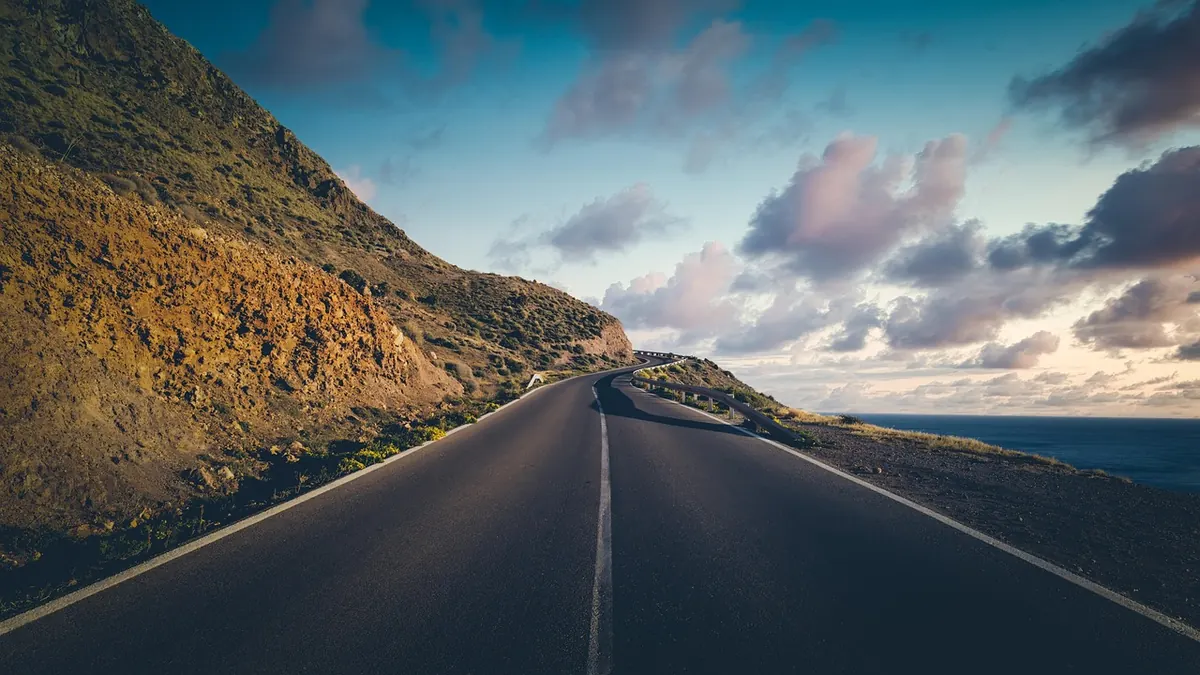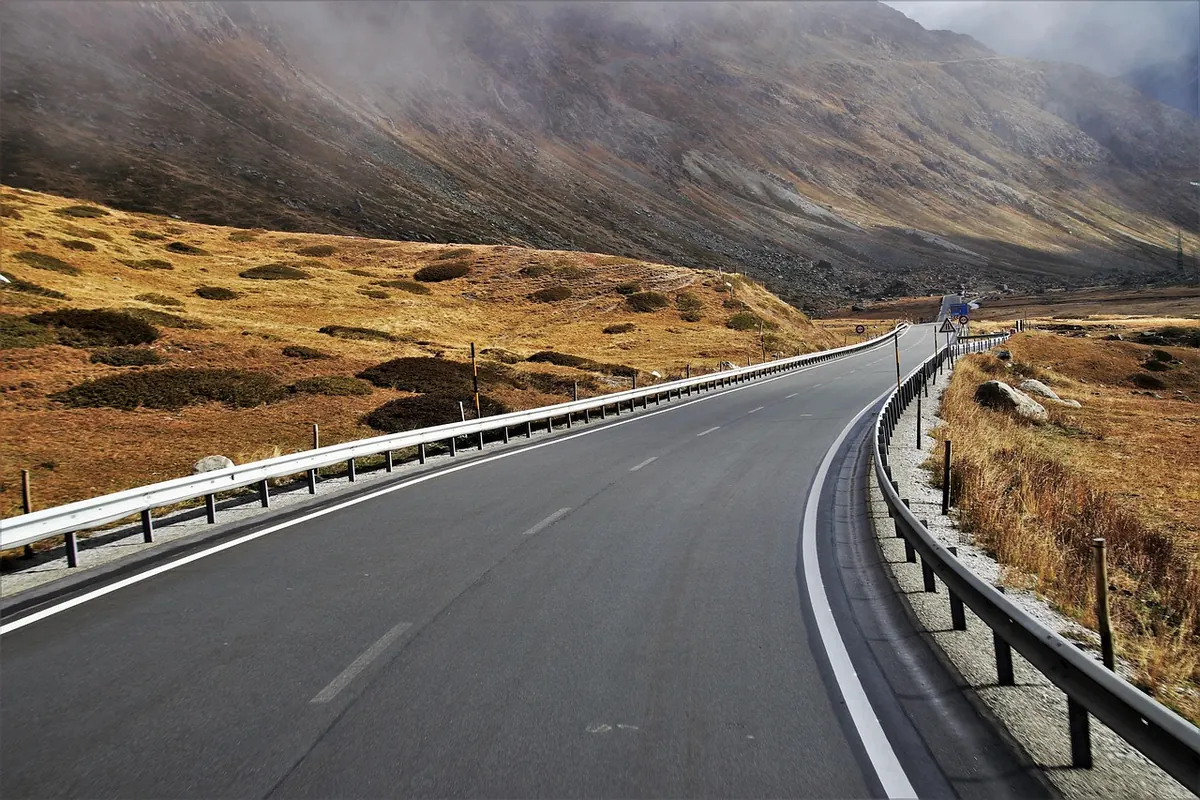
A mountain pass rewards patience. Drive one badly and you spend the climb with your shoulders around your ears, braking late into corners that tighten without warning, reaching the top with cramped hands and no memory of the view. Drive it well and the same road becomes one of the great pleasures of travelling by car: the air cools, the trees shrink, the switchbacks stack up like a staircase, and every bend pays you back with something new. The skills involved are not exotic. They come down to reading the road ahead, preparing the car, and resisting the urge to rush. Here is what to know before your first serious climb.
Start With the Weather at the Top
The forecast for the town where you slept is close to useless for the pass above it. Temperature drops roughly one degree Celsius for every 150 metres you climb, so a mild morning at 600 metres can mean single digits and a hard wind at 2,000. Add a summit exposed on three sides and the gap becomes the difference between a T-shirt and the jacket you are very glad to have packed.
Read the forecast for the summit, not the valley, and look at the shape of the day rather than a single number. Summer storms tend to build through the afternoon, so a seven o'clock start usually beats a two o'clock one. Check that the road is actually open: many high passes close with the first autumn snow and stay shut until late spring, and some shut overnight or after heavy rain. Local road-authority pages and live webcams beat a navigation app that will happily route you to a closed barrier.
Winter rules deserve their own check. Requirements for winter tyres and snow chains vary by country and even by region, and they can be enforced at the roadside. Confirm what applies to your route before you leave, and practise fitting chains once in daylight rather than for the first time in the dark.
Prepare the Car and Yourself in the Valley
Mountain roads are hard on a car in ways that city driving never reveals. Ten minutes of checking in the valley is worth an hour of worry on the climb.
- Tyres: check tread depth and pressure. A slow leak that is merely annoying at sea level becomes a real problem on a pass with no shoulder and no phone signal.
- Brakes: they will do more work on the descent than on the climb. If the pedal has felt soft or the car shudders under braking, deal with it before you go.
- Fuel: fill up in the valley. Stations thin out quickly above the tree line, and climbing burns more than cruising.
- Coolant and oil: a long climb in low gears raises engine temperature. Check levels while the engine is cold.
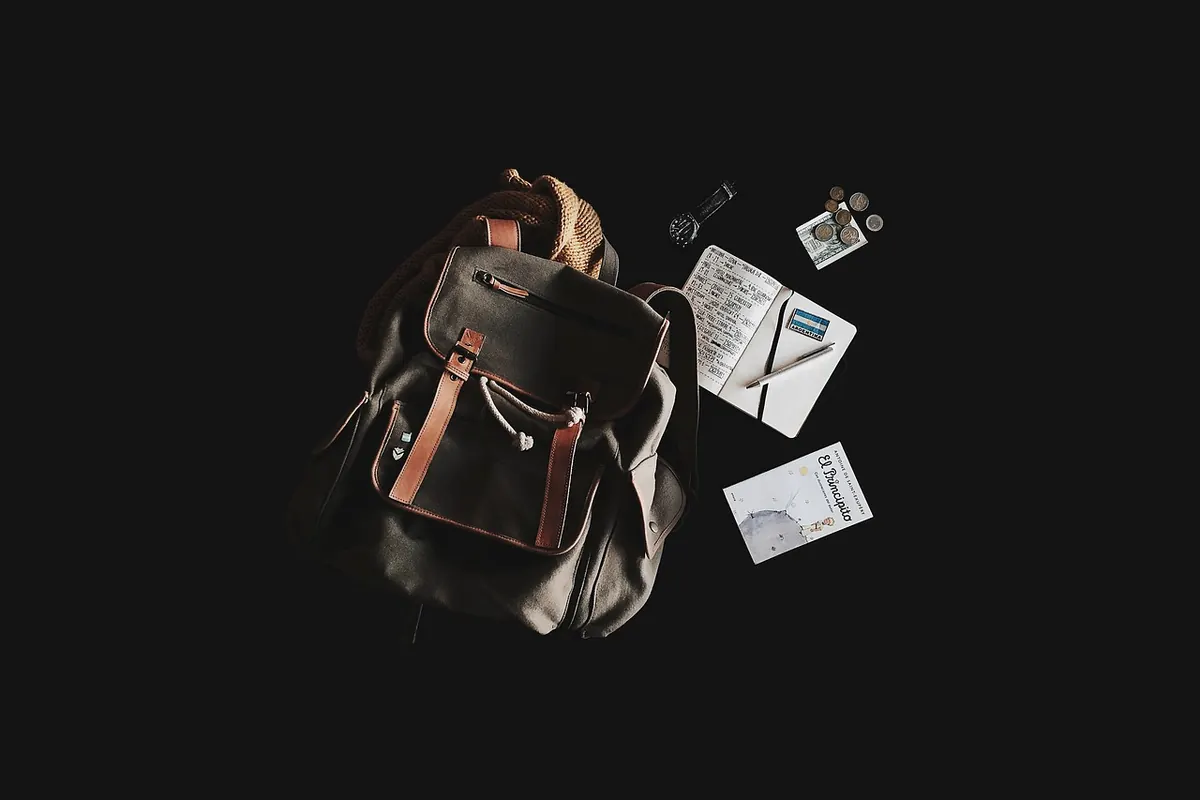
- Clothing and water: pack a warm layer, a waterproof shell and something to drink. You may be standing beside the car at 2,000 metres fitting chains, or waiting for a herd of cattle to move.
- Offline maps: download the area before you lose signal. Paper is not romantic nostalgia up here; it is a backup.
- Loose loads: secure anything heavy. Hairpins turn a suitcase into a projectile.
Grades, Gears, and Hairpins
What the percentage signs mean
A 10 percent gradient means the road rises ten metres for every hundred travelled, which sounds gentle and feels anything but. Steeper sections are often signed with their length as well — a 12 percent descent lasting four kilometres is a different proposition from a short ramp. Read those signs as instructions, not decoration.
Engine braking instead of brake riding
On the way down, select a lower gear and let the engine hold the car back, using the brakes in firm, short applications rather than riding them continuously. A long descent with the brakes on will overheat them, and the pedal will eventually go long and soft — the classic cause of mountain accidents. If you feel that fade, pull into a safe lay-by, stop, and let everything cool. Do not pour water on hot discs.
Hairpins, one at a time
- Slow down before the bend, while you can still see what you are doing, then ease through it. Braking mid-corner unsettles the car.
- Look at the exit, not at the wall. Your hands follow your eyes, and your eyes should already be past the apex.
- Stay inside your own lane. On blind corners, oncoming drivers cut the line more often than anyone admits, and a wide entry on your side is not a licence to use theirs.
- Keep momentum on the climb — but not at the cost of the line. Rolling at a steady 35 km/h through a set of switchbacks is easier on the car than stopping and restarting.
Sharing a Narrow Road
Above a certain altitude, roads stop being built for two cars to pass comfortably. In Italy and many other mountain regions, uphill traffic generally has priority on stretches too narrow for both directions, and the descending driver is expected to reverse to the nearest passing place. Rules and local habits differ, so treat the principle as courtesy rather than law: if you are coming down and the other driver is committed, find the pullout.
Expect the unexpected upstream of you: cyclists climbing at walking pace on a blind corner, motorcyclists overtaking where they should not, a tractor, a bus that needs the whole road, cattle with no interest in your schedule. Slow early, wave your thanks when someone gives way, and use the signed passing bays rather than the grass verge. If a faster local driver appears behind you, let them past at the next wide spot. They know the road; you do not.
Pace, Breaks, and Conditions That Change
Distances in the mountains take longer than the map suggests. Forty kilometres of pass can easily be two hours, and building a schedule around optimistic numbers is how people end up descending a strange road in the dark. Pick a pace you can hold comfortably through the tightest section and keep it — a rhythm matters more than speed.
Take a real break at the summit or a viewpoint every hour or so. Mountain driving demands more attention than motorway driving, and attention is what runs out first. If you or a passenger start feeling queasy, stop, get out, look at something far away for a few minutes. Drive within your own limits rather than trying to keep up with the car in front.
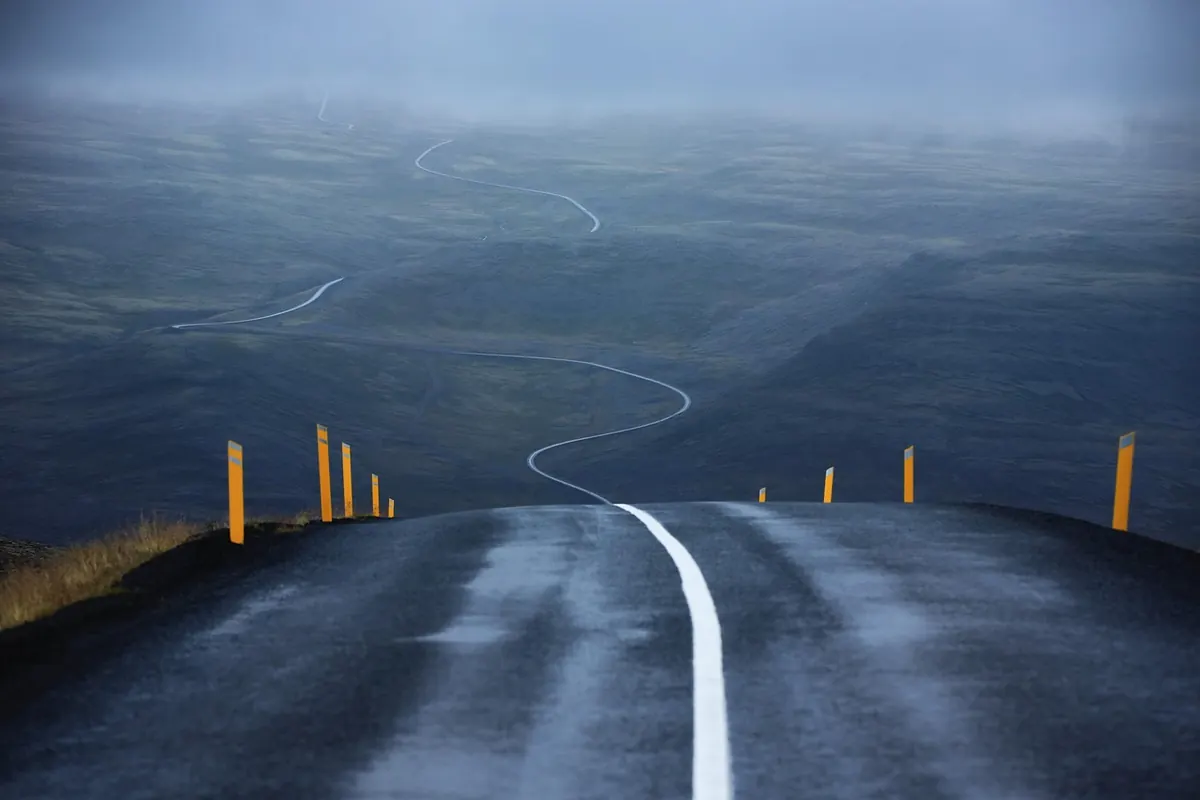
Conditions can turn within a kilometre. In fog, use dipped headlights and keep a generous gap; high beams bounce light back and make things worse. On wet tarmac, painted lines, shaded corners and metal drain covers are especially slippery. Watch for gravel and small rockfall on the inside of bends, and for deer or cattle around dawn and dusk. If you need to stop, choose a marked lay-by or a visible straight, not a bend, and switch on your hazard lights.
Before You Turn the Key
Five minutes in the car park covers most of what can go wrong: summit forecast read, road status checked, tank full, tyres and lights fine, warm layer and water within reach, offline map downloaded, and a realistic arrival time in mind. Then leave the schedule in the glovebox and give the road the attention it has earned. Climb gently, descend gently, and let the view do the rest.
Photo: pasja1000 / Pixabay